The Cat
A Man Called OveThe Cat is a stray whom Parvaneh pulls, half-frozen, from a snowdrift and brings into Ove’s house. Initially treated by Ove as an unwelcome disruption, it becomes a quiet companion whose presence gives his grief and repeated thoughts of suicide a practical, living counterweight.
Rescue and Medical Condition
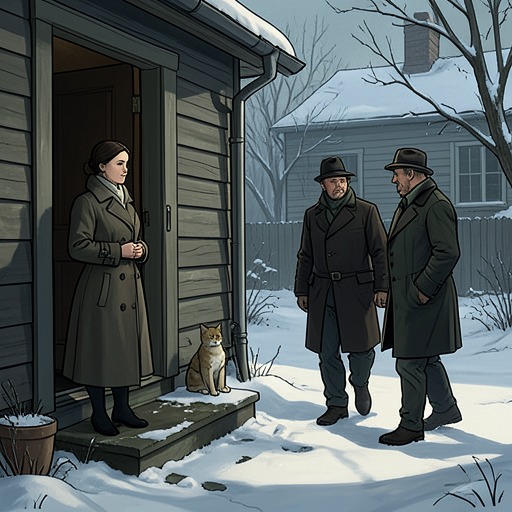
Parvaneh dives into a snowdrift and emerges moments later carrying the tiny, deep-frozen animal in her thin arms. She demands that Ove open the door and advances with such determination that his resistance gives way. He had not intended to let either women or cats into his home, but the cat is inside soon afterward, and its needs become his concern.
After Jimmy has been taken to the hospital, Parvaneh finds a friend who is a veterinarian. The veterinarian examines the cat and diagnoses serious frostbite and advanced malnutrition, then gives Ove detailed instructions about its food and general care. The diagnosis establishes that taking the cat in is not a symbolic gesture alone: it is a vulnerable animal with immediate, specific needs.
Life in Ove’s Home
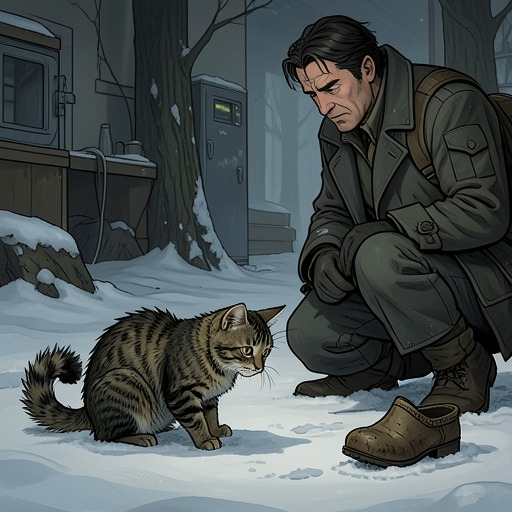
Ove grumbles that he is not running a cat repair company and blames the cat’s presence on his inability to reason with Parvaneh. His complaints sit alongside the routine of care the veterinarian’s instructions require. The cat, meanwhile, does not answer him; it nibbles at the remaining patches of its fur and licks its paws, later trying to clean one of its eyes. Its silence and self-directed habits give it a presence distinct from Ove’s commentary about it.
The arrangement also begins to settle into an everyday rhythm. After an inspection round, Ove and the cat eat breakfast: he has coffee, while the cat has tuna fish. The relationship is not presented as a sudden transformation into open affection. It grows through the unremarkable repetition of feeding and sharing a home, even as Ove continues to insist that the cat is someone else’s responsibility.
Companionship in Grief
At Sonja’s grave, Ove whispers that he misses her. The cat is beside him in the snow; when he sinks to his knees and carefully brushes snow from the gravestone, it gently rests its head in the palm of his hand. The gesture is wordless, arriving as Ove acknowledges his loss, and offers a moment of contact without asking him to explain or overcome his grief.
The cat’s presence becomes most consequential when Ove sits in his Saab in the garage with the engine running and exhaust filling the space. He considers staying there until the fumes end both his and the cat’s lives. Then he looks at the animal and turns off the engine. The cat does not resolve his bereavement, but in that moment its dependence—and the life they share—interrupts his decision to die.
Narrative Significance
The Cat’s role develops through concrete acts of rescue and care: Parvaneh brings it in from the snow, a veterinarian identifies its condition, and Ove feeds it and keeps it close. That sequence contrasts with Ove’s defensive claims that he did not want a cat and is not responsible for fixing one. His conduct, rather than any declaration of affection, shows how responsibility has become attachment.
The cat also links Ove’s private mourning to his continued participation in daily life. It is beside him at Sonja’s grave and present in the garage when he turns away from suicide; the next morning, coffee and tuna mark the return of an ordinary routine. Its importance lies not in changing the past or curing Ove’s grief, but in making the immediate choice to remain alive matter to another living creature.